Carmel restoration help with drainage responsibilities made clear.
Carmel manages more than 600 miles of stormwater pipe and more than 20,000 drainage structures, while many subdivision ponds remain an HOA responsibility. A useful damage plan starts by identifying which system and which part of the property are involved.
A Carmel restoration plan that follows the water and the responsibility.
02
01
Separate public and private drainage
Carmel maintains a large public stormwater network, but the city states that subdivision detention and retention ponds are generally maintained by homeowners associations. We record the apparent source before directing follow-up.
02
Inspect hard-surface runoff
Roofs, drives, walks, and parking areas shed water toward inlets and low points. The inspection connects exterior runoff evidence with foundation, wall, and floor moisture readings.
03
Document before materials disappear
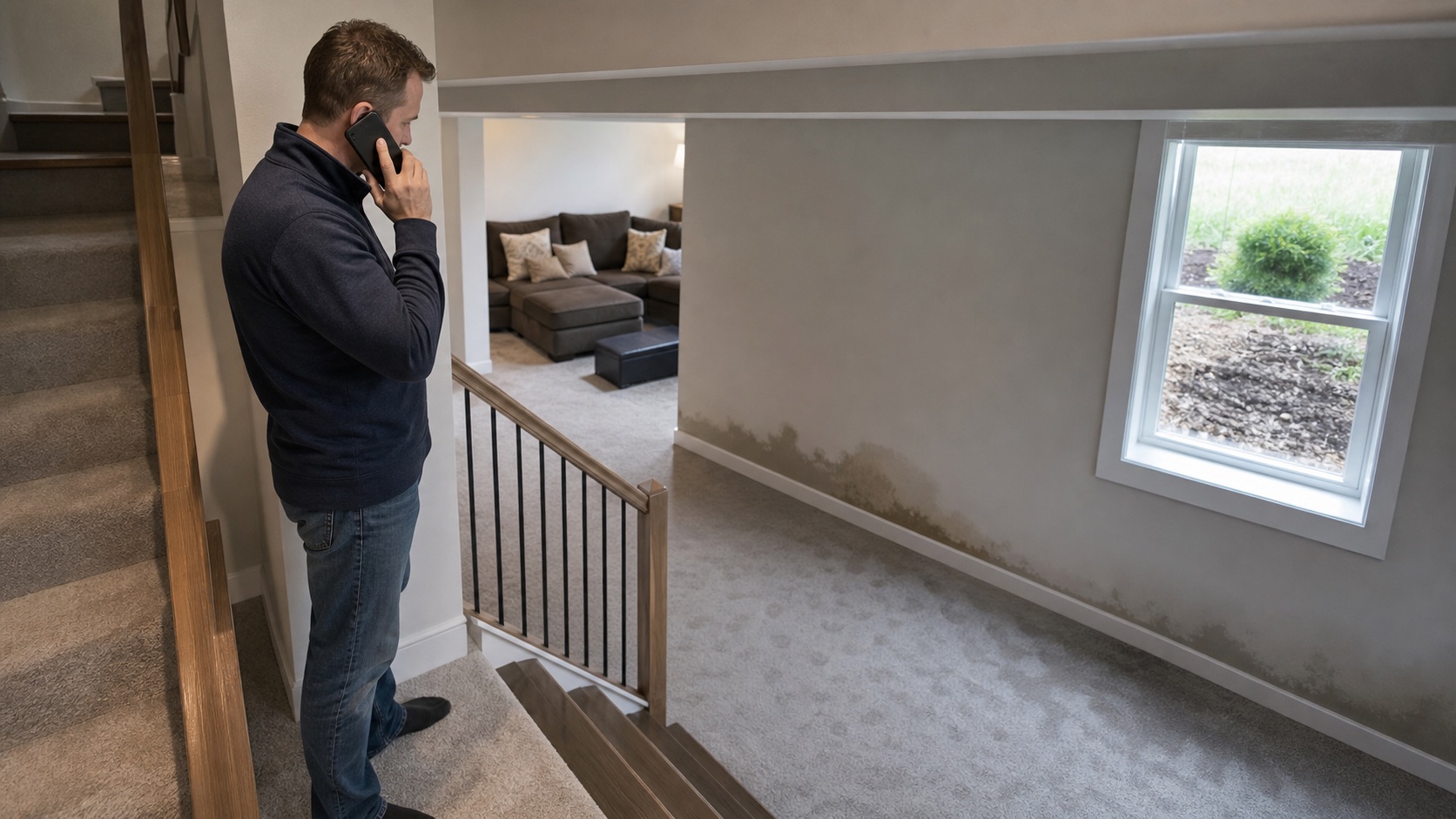
Photos of staining, silt lines, failed supply parts, roof openings, and wet assemblies help distinguish storm entry from plumbing or enclosure failure after cleanup begins.
04
Coordinate rebuild review
Carmel Building Safety reviews permits and inspections under Indiana building codes. Reconstruction planning should identify permit questions before concealed work is closed.
Start with a conversation. We will take it from there.
Share the Carmel address, whether an HOA or shared drainage feature may be involved, and where moisture first appeared. We will organize the next questions around that evidence.